


Geotech Services
Elevation's Geotech Services are engineered geotechnical services that enhance the performance, stability, and durability of critical infrastructure. By leveraging advanced, minimally invasive construction methods, we mitigate subsurface risks, remediate structural deficiencies, and prevent future failure with precision and efficiency. Our expertise in soil stabilization, chemical grouting, concrete lifting, trenchless repair, and waterproofing allows us to deliver cost-effective, long-lasting solutions that reduce downtime, minimize surface disruption, and lower lifecycle maintenance expenses. We partner with municipalities, DOTs, industrial facilities, and commercial property owners to safeguard their assets and improve structural reliability in even the most challenging ground conditions.

Chemical grouting is a highly effective underground stabilization method that utilizes specialized injection techniques to address water intrusion, soil instability, and structural vulnerabilities beneath the surface. By carefully introducing engineered grout materials into targeted subsurface areas, this process creates a durable barrier that prevents water seepage, redirects groundwater flow, and strengthens weak or compromised soils. The injected compounds penetrate voids, fractures, and porous layers, forming a solidified network that binds surrounding materials together. This not only eliminates unwanted infiltration pathways but also reinforces foundations, tunnels, pipelines, and other underground structures that are essential to long-term infrastructure performance. Over time, chemical grouting helps reduce erosion, prevent settlement, and protect against future damage caused by shifting soils or excessive moisture. As a result, this method plays a critical role in extending the lifespan, reliability, and safety of vital civil and industrial systems that operate below ground.
Compaction Grouting

Compaction grouting is an advanced soil stabilization method that strengthens unstable or loose ground beneath structures by injecting specialized expanding polymers deep into the subsurface. Once introduced, these materials gradually expand, filling voids, tightening loose soil, and increasing overall density. This process significantly improves the load-bearing capacity of the ground, helping to correct uneven settlement that can lead to cracks, shifting, or structural damage over time. By reinforcing weak soil layers from below, compaction grouting creates a more stable and reliable foundation base without the need for disruptive excavation. It is commonly used to support residential and commercial foundations, roadways, sidewalks, and large-scale infrastructure projects where long-term stability is critical. This minimally invasive technique not only restores structural integrity but also helps prevent future soil movement, ensuring consistent, durable support for years to come.
Concrete Lifting & Leveling

Concrete lifting and leveling is a precise, minimally invasive process designed to restore sunken or uneven concrete surfaces to their proper height and alignment. Using specialized injection techniques, a stabilizing material is placed beneath the slab to fill voids, lift the concrete, and create a solid, supportive base. This method effectively corrects settlement issues caused by soil erosion, shifting ground, or poor compaction without the need for costly removal and replacement. By raising slabs back to their original position, the process eliminates dangerous trip hazards, improves overall safety, and enhances the appearance of the surface. It also helps prevent further cracking, sinking, or deterioration, which can lead to more extensive damage over time. Concrete lifting and leveling is commonly used for sidewalks, driveways, patios, garage floors, pool decks, and building foundations. This efficient solution extends the lifespan of concrete structures while maintaining their strength, stability, and functionality.
Chemical Grouting
Curtain Grouting

Curtain grouting is a highly effective subsurface waterproofing and soil stabilization technique used to protect below-grade structures from water intrusion and ground instability. In this process, low-viscosity grout is carefully injected into the ground behind retaining walls, foundations, tunnels, or other buried structures. The fluid grout flows through cracks, voids, and porous soil layers, gradually forming a continuous, seamless barrier that blocks water movement. This waterproof curtain prevents seepage, reduces hydrostatic pressure, and minimizes the risk of erosion or soil washout that can compromise structural integrity over time. By reinforcing and consolidating surrounding soils, curtain grouting also improves overall ground stability and load-bearing capacity. Commonly used in basements, underground parking facilities, tunnels, dams, and retaining structures, this method provides long-lasting protection against moisture damage, corrosion, and deterioration, helping extend the service life of critical infrastructure while maintaining safety and structural performance in challenging ground conditions.
Deep Soil Injection
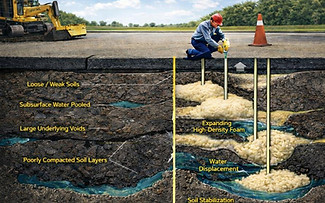
Deep soil injection is a powerful ground improvement technique designed to reinforce weak, shifting, or poorly compacted soils beneath structures. Using specialized equipment, high-density foam polymer resins are injected deep into targeted subsurface layers where instability is present. As the material expands, it permeates voids, compresses loose soil, and increases overall density, creating a stronger and more stable foundation base. This process significantly improves bearing capacity, helping structures better support their weight and resist future movement. By addressing settlement issues at their source, deep soil injection reduces the risk of cracking, tilting, or structural damage over time. Unlike traditional methods that require extensive digging or disruption, this approach is minimally invasive, faster to complete, and less costly overall. It is commonly used for residential foundations, commercial buildings, roadways, and other critical infrastructure. The result is durable, long-term soil stabilization that enhances safety, performance, and structural longevity with minimal disturbance to surrounding areas.
Emergency Soil Stabilization

Emergency ground stabilization is a fast-acting geotechnical solution designed to address sudden soil failure, shifting, or unexpected settlement beneath critical structures. When instability occurs, specialized rapid-response injection techniques are deployed to quickly reinforce weak or compromised ground conditions. High-strength stabilization materials are precisely placed into targeted subsurface areas, where they expand, fill voids, and compact loose soils to restore structural support. This immediate intervention helps halt further movement, reduce the risk of structural damage, and prevent safety hazards that could endanger occupants or the public. The streamlined process allows work to be completed with minimal disruption, keeping facilities, roadways, or buildings operational whenever possible. Commonly used in situations involving foundation movement, sinkholes, utility failures, or erosion-related emergencies, this method provides a reliable and durable solution under time-sensitive conditions. By rapidly stabilizing the ground, emergency ground stabilization protects valuable infrastructure, reduces repair costs, and ensures long-term safety and structural integrity in high-risk scenarios.
Foundation Repair

Foundation repair is a critical process designed to preserve the safety, stability, and value of a structure by correcting issues that develop beneath or within its base. Over time, shifting soils, moisture fluctuations, and natural settling can weaken a foundation, leading to cracks, uneven floors, sticking doors, and structural stress throughout the building. Professional foundation repair employs a range of specialized stabilization and reinforcement methods, including underpinning, pier installation, soil injection, and void filling, to restore proper support and alignment. These techniques address settlement, eliminate hidden voids, and strengthen load-bearing capacity, reducing movement and preventing further deterioration. By proactively repairing foundation problems rather than delaying them, property owners can protect their investment, avoid extensive secondary damage to walls and framing, and ensure the long-term durability, performance, and safety of their home or commercial property for years to come. Regular inspections also help identify risks before they escalate into major failures.
PolyFoam Grout Barrier Systems

PolyFoam grout barrier systems utilize advanced permeation grouts that are strategically injected into subsurface soils to create a seamless, low-permeability underground barrier. This engineered barrier works to significantly reduce or eliminate the movement of groundwater through treated areas, providing a reliable solution for water control in challenging site conditions. By limiting groundwater flow, PolyFoam grout barriers help prevent seepage that can undermine soil stability, weaken foundations, or interfere with construction activities. These systems are particularly valuable for protecting active excavations, reducing hydrostatic pressure, and maintaining safer, drier working environments. Additionally, they play a critical role in safeguarding basements, tunnels, foundations, and other below-grade structures from moisture infiltration, corrosion, and long-term water-related deterioration. Through precise application and durable performance, PolyFoam grout barrier systems enhance structural integrity, extend the lifespan of underground infrastructure, and support more predictable and resilient construction outcomes.
Joint Sealing

Joint sealing is a critical protective process in the construction and maintenance of concrete and masonry structures. Specialized, high-performance sealants are carefully selected and installed within expansion, control, and construction joints to create a resilient barrier against moisture, debris, and environmental contaminants. By preventing water intrusion, joint sealing reduces the risk of freeze-thaw damage, corrosion of embedded reinforcement, and gradual deterioration of surrounding materials. The sealed joints also limit soil migration and erosion that can undermine foundations, slabs, and retaining systems over time. Properly executed joint sealing enhances structural stability, minimizes costly repairs, and supports long-term durability across a wide range of applications, including buildings, bridges, pavements, and industrial facilities. In addition to protection, well-sealed joints improve overall system performance by accommodating natural movement while maintaining continuity and integrity throughout the structure’s service life. This proactive approach ultimately preserves safety, functionality, and value for owners and communities alike over time.
Pipeline Support & Pillows

Engineered polymer support systems are strategically installed beneath buried pipelines to create a durable, stable foundation that maintains proper alignment and structural integrity over time. These high-strength materials are injected or placed in a controlled manner to fill voids, bridge unstable soils, and establish uniform bearing along the length of the pipe. By evenly distributing loads and eliminating point stresses, this method reduces the risk of bending, deformation, or differential settlement that can compromise pipeline performance. The supports also help protect vulnerable joints, fittings, and connections from excessive strain caused by soil movement, erosion, or changes in subsurface conditions. In addition to improving structural reliability, this solution minimizes the likelihood of leaks, breaks, or service disruptions, ultimately extending the operational lifespan of water, sewer, gas, and industrial pipelines while reducing long-term maintenance costs and the need for disruptive repairs.
Retaining Wall & Seawall Stabilization

Specialized injection and reinforcement methods are utilized to strengthen and stabilize retaining walls and seawalls that have been compromised by soil movement, erosion, or structural distress. Over time, changes in groundwater conditions, shifting soils, and lateral earth pressures can cause walls to crack, lean, or lose their ability to support surrounding loads. Through targeted subsurface treatments, high-strength polymer resins or grouts are introduced to fill voids, densify loose soils, and create a more stable foundation behind and beneath the wall. In addition, structural reinforcement techniques may be applied to restore integrity and improve resistance to future movement. This comprehensive approach not only reestablishes the wall’s load-bearing capacity but also reduces the risk of continued displacement, minimizes the potential for collapse, and extends the overall service life of the structure. By addressing both the underlying soil conditions and the wall itself, retaining wall stabilization provides a durable, minimally disruptive solution for long-term performance and reliability.
Settlement Mitigation

Settlement mitigation involves the strategic application of engineered injection techniques designed to stabilize compromised ground and reestablish reliable load-bearing capacity beneath structures that have experienced movement. High-density polymer resins or cementitious grouts are delivered through precisely placed injection points to densify loose soils, fill voids, and reinforce zones of weakness within the subsurface. As the material expands or hardens, it compacts surrounding soils and restores uniform support, allowing foundations, slabs, and buried utilities to return to their intended elevations. This targeted, minimally invasive approach limits the need for disruptive excavation while effectively addressing the root causes of differential settlement, such as soil consolidation, erosion, or loss of bearing. In addition to correcting existing displacement, settlement mitigation improves long-term ground performance, reduces the likelihood of recurring movement, and helps protect structural integrity, operational safety, and asset value over the life of the project across diverse geotechnical and structural conditions and environments.
Soil Stabilization

Soil stabilization encompasses a suite of engineered ground improvement methods designed to enhance the physical and mechanical properties of in-situ soils. Through controlled injection, mixing, or densification processes, problematic soils are transformed into a more uniform, resilient, and predictable bearing medium. These techniques address common geotechnical challenges including expansive clay movement, differential settlement, poor compaction, washout, and subgrade degradation caused by moisture or cyclic loading. By increasing shear strength, reducing compressibility, and limiting permeability, stabilization minimizes future movement and protects overlying structures from cracking, tilting, or premature deterioration. The process can be tailored to site-specific conditions, allowing for targeted treatment beneath foundations, pavements, slabs, utilities, and embankments. Whether applied in new construction, rehabilitation, or emergency repair, soil stabilization provides a minimally invasive, cost-effective alternative to large-scale excavation or replacement, delivering durable performance and improved safety over the life of the asset. This supports sustainability and reduces project risk and uncertainty.
Structural Reinforcement

Structural reinforcement involves the strategic application of specialized ground improvement and stabilization techniques designed to restore, strengthen, and optimize the performance of weakened or distressed structures. By addressing underlying soil instability, voids, and load-bearing deficiencies, these advanced methods enhance structural resilience and improve overall load distribution. Through precise injection, compaction, and substrate modification processes, the surrounding ground is densified and stabilized, reducing movement, mitigating settlement, and preventing further deterioration. This proactive approach not only corrects existing structural vulnerabilities but also increases resistance to future stress, environmental changes, and dynamic loading conditions. Ultimately, structural reinforcement extends the service life of critical infrastructure, minimizes the risk of failure, and provides a reliable, long-term solution that preserves safety, functionality, and investment value while reducing the need for disruptive and costly traditional repairs.
Tank Pad Stabilization

Advanced injection techniques are employed to strengthen underlying soils and remove hidden voids beneath storage tanks, industrial vessels, and heavy equipment pads. By delivering high-density stabilization materials deep into the subsurface, this process compacts loose soils, fills gaps, and creates a more uniform load-bearing foundation. The treatment improves overall ground integrity, reducing differential movement that can lead to cracking, tilting, or structural distortion. Stabilized soils better resist shifting caused by vibration, groundwater migration, or long-term loading, helping to maintain precise alignment and operational reliability. This trenchless approach minimizes site disruption while providing long-lasting support for critical infrastructure. By restoring consistent bearing capacity beneath tank pads and equipment foundations, the system significantly lowers the risk of future settlement, enhances safety, and protects valuable assets from expensive repairs, operational downtime, and potential environmental or structural failures.
Underpinning

Underpinning is an advanced ground improvement technique that utilizes controlled, high-strength polymer injections to rehabilitate foundations compromised by soil movement, settlement, or inadequate bearing conditions. By strategically introducing engineered resins beneath and around structural elements, the process densifies weak soils, fills subsurface voids, and re-establishes uniform load distribution across the foundation system. This targeted approach not only increases bearing capacity but also helps realign displaced structural components, mitigating cracking, differential settlement, and ongoing movement. Unlike traditional underpinning methods that require extensive excavation, demolition, or heavy shoring, polymer-based underpinning is minimally invasive and can be performed from small access points with little to no disturbance to buildings, landscaping, or underground utilities. The result is a durable, long-term stabilization solution that preserves structural integrity, reduces future maintenance risks, and extends the service life of the foundation.
Void Filling
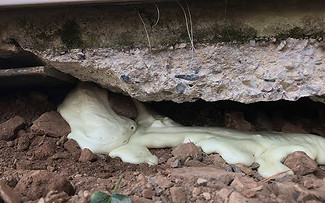
Engineered injection solutions are deployed to address subsurface voids and compromised soils that threaten structural stability. By introducing lightweight yet high-strength polymer materials into underground cavities, this process effectively fills empty spaces, consolidates loose soil, and reinforces weak ground conditions. The expanding resin permeates irregular voids, displaces trapped water or air, and forms a durable, load-bearing mass that integrates with the surrounding soil matrix. This targeted ground improvement technique reduces the risk of surface subsidence, differential settlement, and sinkhole formation while restoring structural support beneath foundations, slabs, roadways, and utilities. Because the method is minimally invasive and trenchless, it can be performed with little disruption to existing structures or operations. Over time, void filling enhances overall ground performance, improves safety, and helps extend the service life of critical infrastructure by preventing progressive soil movement and related structural damage.
Waterproofing & Leak Sealing

Advanced waterproofing and leak-sealing solutions are designed to prevent water intrusion into below-grade and buried structures, ensuring long-term performance and structural integrity. Using engineered grouts, resins, and specialized sealing materials, targeted injection and surface treatment methods are applied to intercept active leaks, seal cracks and joints, and eliminate groundwater migration pathways. These systems create durable barriers that resist hydrostatic pressure, chemical exposure, and soil movement, making them suitable for foundations, basements, tunnels, vaults, manholes, and other subsurface facilities. By stopping infiltration at its source, this process mitigates corrosion, erosion, and moisture-related degradation while reducing maintenance demands and extending service life. The result is a more resilient structure with improved stability, reduced risk of damage, and enhanced protection against future water-related issues in challenging underground environments.
Soil Liquefaction Mitigation

Liquefaction mitigation involves a range of engineered ground improvement methods designed to lower the likelihood that saturated soils will lose strength during earthquakes or other dynamic loading events. Through carefully planned subsurface treatment, weak or loose soils are strengthened, densified, and stabilized before they can jeopardize foundations or critical infrastructure. Techniques such as soil compaction, deep soil mixing, stone column installation, and controlled grouting work together to reduce pore water pressure buildup and limit lateral spreading beneath structures. As soil stiffness and shear resistance increase, ground movements become more predictable and less damaging. This proactive approach not only minimizes the potential for sudden settlement, tilting, or structural failure but also improves long-term performance of buildings, bridges, and lifelines. Effective liquefaction mitigation ultimately provides greater safety, resilience, and peace of mind for property owners, engineers, and communities located in seismically active regions across urban, coastal, and rural landscapes throughout the world.
Permeation Grouting

Permeation grouting is a specialized ground-improvement technique that involves the precise injection of low-viscosity polymer or chemical resins into subsurface soils. These advanced resins flow deep into existing voids and pore spaces within loose or granular soils, gradually filling gaps and creating a more cohesive, stable soil matrix. As the material cures, it effectively binds individual soil particles together, significantly increasing overall soil density while reducing permeability and water infiltration.
Because this process is trenchless and minimally disruptive, it is particularly valuable in sensitive environments or developed areas where excavation is not practical. Permeation grouting helps seal active groundwater pathways, preventing unwanted seepage or migration that could undermine structures. It also reinforces weak or highly permeable soils, enhancing their load-bearing capacity and resistance to erosion. This method is commonly used to protect and stabilize foundations, underground tunnels, retaining walls, pipelines, and buried utilities—especially in areas subject to high hydrostatic pressure, fluctuating water tables, or ongoing soil erosion.